Federal Changes in Grant Priorities and Implications for School-Based Mental Health Programs
The recent decision to discontinue a $1.9 million federal mental health grant for Rochester Public Schools has sparked a heated debate among educators, policymakers, and community stakeholders alike. This opinion editorial takes a closer look at the policy shift, the tricky parts of federal funding changes, and the tangled issues surrounding mental health support in school settings. While the decision was made against the backdrop of dire mental health statistics among students, it also reflects broader political realignments affecting educational funding nationwide.
With the grant originally designed to bolster mental health support through the School Based Mental Health Scholars program at Winona State University, its abrupt cancellation has left teachers, staff, and aspiring social workers facing a nerve-racking future of uncertainty. In this article, we will dig into the background of the situation, examine the off-putting policy shifts behind the decision, and offer thoughtful perspectives regarding what this means for the well-being of students and the professional development of educators.
Background and Context: The Mental Health Crisis in Schools
In recent years, the mental health of students has been a topic of critical importance, especially in communities where emotional well-being is already under pressure. Data provided by the Rochester school district revealed unsettling facts: around 32% of 11th graders had seriously considered suicide, and 11% had actually attempted it—figures that are significantly higher compared to state averages. These numbers shine a spotlight on the pressing need for comprehensive mental health services in schools.
Many educators and parents believe that investing in strategies to address student mental health is essential, and the intended grant was seen as a super important step toward filling the gap in support services. By offering tuition scholarships for faculty and staff to earn degrees in social work, the program was poised to address both the immediate psychological needs of students and the long-term need for qualified mental health professionals. The background of these initiatives is rooted in the belief that a supportive educational environment must also attend to the emotional challenges faced by young people today.
At its core, the program was meant to provide an avenue for educators to gain the necessary skills while simultaneously serving as a solution to the shortage of mental health providers. However, external factors—including shifting administrative priorities and political climate—led to a situation where even well-intentioned support efforts can become tangled issues within federal policy.
The Rollback of Mental Health Funding: Twists and Turns in Policy
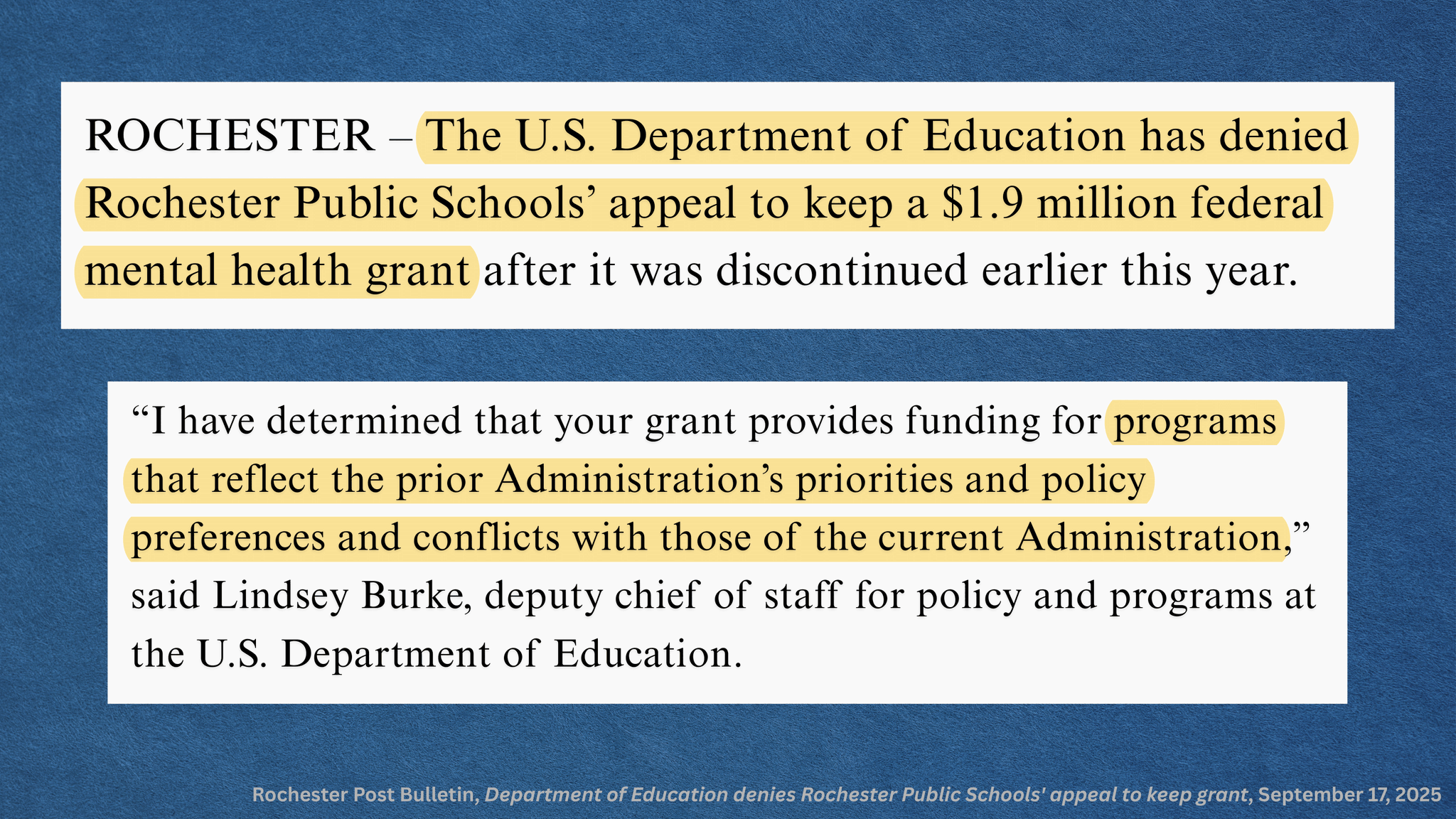
The decision to cut off the $1.9 million grant reflects a significant twist and turn in the federal approach to mental health funding in education. According to a letter from the U.S. Department of Education, the grant was discontinued because it adhered to the former administration’s priorities, which conflicted with those of the current leadership. In simpler terms, what was once considered a key initiative has now been sidelined due to a change in years of policy focus.
Many school officials view this move as a step backward—especially Superintendent Kent Pekel, who argued that the grant was meant to counteract the overwhelming mental health crisis affecting students across a broad spectrum of backgrounds. The program specifically prioritized scholarships for individuals from diverse and underrepresented communities, a move intended to foster representation and inclusivity in mental health services. However, with the new administration signaling its own set of policy preferences, the cancellation of such grants has now become one more confusing piece in the already complicated puzzle of federal funding for education.
This rollback has saved its own share of criticism and debate. Supporters of the program argue that, while policy shifts are inevitable, the timing of the decision undermines important investments in student mental health—especially when the data suggest a deep need. Critics contend that realigning priorities at the federal level might be necessary for a broader reformation of education policies, yet the immediate impact on programs like the mental health scholarship is undeniable.
Effects on Social Work Training and Staff Development
The cancellation of the grant places Rochester Public Schools at a crossroads when it comes to staff training and development. The School Based Mental Health Scholars program was not only a pathway for individuals to earn degrees but also a strategic attempt to build long-term capacity for mental health support in schools. By covering the tuition costs for educators to become social work professionals, the program promised to provide a pipeline of trained professionals who could understand and manage the emotional needs of students.
With several participants having already completed parts of the program, the decision puts those futures in jeopardy. It creates an intimidating scenario for faculty—especially for the 10 individuals currently enrolled who now face uncertainty regarding their ability to complete the program and earn their licenses. For many staff members, this grant was more than just financial support; it was a lifeline that could have enhanced the quality of mental health care available in schools.
The impact of cancelling such a grant goes beyond individual careers; it has wider ramifications for the community. When the number of qualified mental health professionals is low, schools lose a critical resource needed to address the ever-growing mental health challenges among students. The ripple effects of this decision, in turn, could jeopardize the overall well-being of an already struggling student population.
Analyzing Policy Shifts: The Changing Landscape of Educational Funding
It is important to take a closer look at the underlying policy shifts that led to the discontinuation of the grant. While educators are still digesting the news, a closer analysis reveals that the decision is emblematic of broader administrative priorities. The contract, which once focused on combating critical student mental health challenges, now appears to be a casualty of evolving federal policy preferences.
One key point in the discussion involves understanding how administrative changes can trigger abrupt policy reversals that affect local communities. The U.S. Department of Education’s letter indicated that the grant’s focus on tuition scholarships for diverse and underrepresented groups was aligned with policies of a previous administration. What might seem like a misaligned objective is instead a reflection of how federal priorities shift, impacting programs at the state and local levels in ways that are both immediate and widespread.
This scenario is illustrative of a larger pattern, where educational systems must figure a path through ever-changing federal support landscapes. For schools grappling with ever-complicating pieces of mental health challenges, the inconsistency in funding creates additional hurdles. Once praised as a proactive measure, the grant now stands as a stark example of the difficulties in managing your way through a maze of shifting federal policies.
To summarize the contrasting perspectives on this issue, consider the table below:
| Aspect | Positive Impact (Before Cancellation) | Negative Impact (After Cancellation) |
|---|---|---|
| Student Well-Being | Enhanced support through qualified mental health professionals | Potential increase in unmet mental health needs |
| Teacher and Staff Development | Financial assistance for advanced degrees in social work | Interruption in professional training and career advancement |
| Diversity and Representation | Focused scholarships for diverse and underrepresented populations | Loss of targeted funds for critical inclusivity measures |
| Administrative Confidence | Support for proactive mental health programs | Uncertainty stemming from federal policy shifts |
This table highlights how a financial decision made at the federal level can affect several levels—from student well-being to the career trajectories of educators—and underscores the complexity of our current educational funding landscape.
Opportunities Lost: Impact on Diverse and Underrepresented Communities
One of the original goals of the discontinued grant was to provide tuition scholarships specifically geared toward individuals from diverse and underrepresented backgrounds. Such initiatives are seen as super important for fostering an inclusive environment where every student and staff member feels represented. However, the cancellation of the funding means that these opportunities are now lost, intensifying concerns among community leaders and advocacy groups.
Many argue that when initiatives targeted at inclusivity are put on hold, the broader community suffers. Teachers and administrators who were set to benefit from advanced training in social work might have become critical lifelines for students grappling with emotional challenges. Their absence or delayed progress can have a cascading effect, particularly in schools where students are already battling stigma and other social pressures.
In communities that are already loaded with problems, especially those riddled with tension around issues of mental health, every missed opportunity counts. The ability to have a diverse group of professionals in critical roles is viewed as a key ingredient in creating a supportive educational ecosystem. The cancellation of targeted funding not only threatens to reduce diversity in mental health support roles but also signals that the needs of underrepresented communities might not always be considered a top priority when state or federal policies change abruptly.
To put this into perspective, consider the following bullet list that encapsulates the expected benefits of targeted funding before its cancellation:
- Provision of specific scholarships designed for educators from diverse backgrounds
- Increased representation in mental health support roles within schools
- Enhanced cultural competence in addressing a broad range of student needs
- Greater community trust in educational and mental health institutions
The loss of such benefits is a significant setback that not only affects the individuals directly involved but also undermines community-wide efforts to create a more inclusive support system for every student.
The Human Element: Voices from the Classroom and Community
Beyond charts, tables, and policy letters, the human stories behind these decisions are what bring the issue into sharp focus. For many educators, the loss of the mental health grant translates to not just professional setbacks but also to personal and emotional challenges. Teachers report feeling overwhelmed and disheartened by the sudden removal of a resource that was meant to support both their growth and the well-being of their students.
Superintendent Kent Pekel, for instance, described the termination of the grant as a major step backward in the fight against the profound mental health challenges confronting today’s classrooms. His remarks are echoed by several staff members who had already invested significant time, energy, and hope into the program. For these professionals, the abrupt shift is not merely an organizational setback—it is a deeply personal blow with long-lasting implications.
In the corridors of Rochester Public Schools, educators are now left to figure a path through the confusing bits of funding uncertainties. The environment is one where even the smallest distinctions in policy can have significant impacts. As many parents and community members try to piece together the finer details, there is a growing concern that without steady support, the school environment could become increasingly tense and off-balance.
At its heart, the story is one about people—students who face mental health struggles, teachers striving to support them, and administrators caught between conflicting policy mandates. It underscores the essential nature of sustained investment in educational and mental health programs, and the regrettable costs when such investments are compromised.
Looking Forward: What Schools Can Do Amid Funding Hurdles
While the cancellation of the grant is undoubtedly a setback, it also prompts educators and school administrators to think creatively about alternative paths forward. In times of financial strain and policy uncertainty, it becomes even more critical to strategize and find ways to support both staff and students without the initial federal backing.
Here are some practical steps that schools and communities might consider as they work through this challenging period:
- Local Partnerships: Schools can look to local universities, community organizations, and mental health clinics to forge partnerships that could provide alternative training and support opportunities for educators.
- State-Level Initiatives: While federal funding might be in flux, some state-level programs remain available and could be harnessed to fill part of the gap. Advocating for state-supported mental health training could offer a much-needed lifeline.
- Grant Writing and Fundraising: Invest time in identifying and applying for other grants that target mental health and professional development. Local school boards may also consider launching fundraising events dedicated to supporting mental health initiatives.
- Community Involvement: Engage parents, local businesses, and community leaders in dialogue about mental health funding. Community-driven pressure can sometimes influence policy decisions and open up new sources of funding.
- Alternative Professional Development: Consider online courses, community college offerings, or professional workshops that can serve as a substitute or supplement to the canceled program.
These suggestions—while not a perfect substitute for the lost federal funding—highlight the importance of making the best out of a difficult situation. They represent a way to steer through these challenging times by identifying and leveraging available local and state resources, ultimately ensuring that students receive the mental health support they need.
In addition to these measures, it is critical for stakeholders at every level to keep an open line of communication with policy makers. Community advocacy groups could play a pivotal role in reminding state and federal officials of the on-the-ground impact of these decisions. It is through sustained dialogue that policies might be reformed or repurposed to better address the pressing needs of schools.
Long-Term Implications for the Education System
This episode in Rochester’s educational funding history illustrates the broader, long-term implications of shifting federal policies. As school districts across the country watch these events unfold, there is a growing sense that instability in funding priorities could have a lasting effect on both educational quality and student well-being.
One of the most confusing bits about federal funding is the frequency with which priorities are realigned. Each new administration brings with it new ideas, which can lead to unpredictable changes to programs like the mental health scholarship initiative. This leaves many schools, which depend on a steady influx of funds to maintain their support systems, struggling to make your way through a convoluted maze of red tape and rapidly changing guidelines.
For teachers and administrators, this means that every strategic plan now carries a hidden risk—a risk that even well-conceived programs might be dismantled overnight. The scenario becomes particularly tricky when innovative projects with great potential are shelved on the basis of political disagreements rather than evidence of inefficacy. The result is a landscape in which educators find themselves having to constantly adapt and rework their plans in response to new political signals.
In this light, it is clear that securing consistent staffing and program funding requires the development of more resilient strategies. Schools might consider diversifying their funding streams to include local government support, private philanthropy, and innovative community engagements that reduce reliance solely on federal grants. By doing so, education institutions can lessen the vulnerability of their programs to the turbulent twists and turns of federal policy changes.
A summary of the long-term implications might be organized as follows:
| Challenge | Long-Term Impact |
|---|---|
| Frequent Policy Shifts | Leads to unstable program funding and uncertain professional development prospects |
| Overreliance on Federal Grants | Hazards when priorities change, necessitating diversified funding sources |
| Impact on Underrepresented Communities | Missed opportunities for inclusivity and culturally competent services |
| Teacher Morale and Retention | Intimidation and uncertainty can reduce staff retention, impacting student support |
These issues highlight the need for policies that are not only flexible in responding to contemporary challenges but are also robust enough to offer a measure of certainty and continuity for the future. Only then can the education system hope to address the many subtle details and hidden complexities of mental health needs in a holistic manner.
Finding a Balanced Approach: Maintaining Core Educational Values Amid Policy Shifts
In our current educational climate, grappling with funding interruptions and policy reversals is becoming an all-too-common experience for many school districts. The cancellation of the Rochester mental health grant serves as a case study that underscores the importance of maintaining core educational values—such as inclusivity, student well-being, and continuous professional development—regardless of political winds.
Even as federal policies change, it is critical for local educational communities to pinpoint the key components that define a supportive learning environment. These include:
- Consistent Mental Health Support: Every student deserves access to quality emotional and psychological services.
- Diverse Professional Pathways: Ensuring pathways for teachers to further their education and contribute to a richer school culture.
- Community-Centric Approaches: Engaging local voices to offer feedback and drive tailored solutions for pressing regional issues.
- Innovative Funding Strategies: Building resilient financial models that can buffer against the unpredictable nature of federal funding cycles.
These fundamental principles can serve as a compass for schools as they work through the intimidating process of re-establishing lost opportunities. By anchoring their strategies in these unchanging values, educational institutions can better weather the storm of policy reversals and continue to provide essential services even in challenging times.
Moreover, this situation is a reminder that while federal policies have a significant impact, the drive to support students ultimately resides in a cooperative effort among state officials, local school boards, educators, and community advocates. When these groups work together, they can tame the overwhelming complexity of shifting priorities and build a more sustainable model for funding and support.
Conclusion: A Call for Thoughtful Reevaluation and Commitment to Student Well-Being
The discontinuation of the federal mental health grant for Rochester Public Schools is a sobering example of how policy decisions made at the highest levels can trickle down to affect local communities in profound ways. With critical programs abruptly halted, the impact on student mental health, professional development opportunities for teachers, and overall community well-being is both extensive and worrisome.
As we take a closer look at this situation, it becomes clear that there is a need for policymakers, educators, and community leaders to come together and find stable, long-term solutions. This means not only addressing the immediate fallout from such funding cuts but also developing resilient strategies that can absorb the shocks of future policy shifts.
The tangled issues at hand remind us that every decision made on the federal level has a human impact. For every grant revoked, there are teachers and students left to cope with the repercussions—whether it be a halted career pathway or an unmet need for vital mental health services. What is needed now is a balanced approach that navigates the fine points of policy while keeping the focus firmly on transforming and safeguarding our educational environments.
In closing, this episode should serve as a rallying call for all stakeholders in the education system to sort out the pathways that best support the well-being of students and educators alike. By working together, fostering local partnerships, and advocating for more predictable funding streams, we can help ensure that the twists and turns of federal policies do not derail the essential mission of education: to nurture, support, and empower every learner.
As communities move forward, let us remember that while the path may be strewn with intimidating challenges and nerve-racking uncertainties, our collective commitment to student well-being and professional growth remains unwavering. This commitment is the true cornerstone of educational progress, one that must endure regardless of the shifting tides of federal policy.
Originally Post From https://www.mprnews.org/story/2025/09/19/rochester-schools-mental-health-grant-denied
Read more about this topic at
Supreme Court lets Trump cut $783 million of health …
Trump administration illegally axed NIH grants …