
Reflections on a Failed Patio Project and Blind Spots in Education Policy
Last weekend, as I struggled to hang outdoor lights along our patio, I became painfully aware of the hidden complications that can arise in even the simplest of projects. I was absolutely sure that the spacing between the four-square poles was not the cause of my failure. Confident in my own reasoning, I insisted to my wife that the light string’s weight was challenging the thin, overly priced poles rather than the setup’s design. However, as the evening unfolded, her correct calculations and the physical evidence before me made it all too clear: sometimes, we overlook the obvious issues in our rush to trust our assumptions. This small domestic fiasco mirrors a much larger debate about the blind spots in New Hampshire’s universal school voucher program—a matter that sparks intense discussions among educators, policymakers, and families across the state.
In education, as in do-it-yourself projects, it is crucial to balance confidence with humility, recognizing that our understanding is often limited by what we simply do not see. The lessons learned from my failed attempt at decorating a simple patio remind us of the delicate balance between optimism and the necessity to address hidden hurdles. Just as a misstep in a home project can lead to an unfinished night of fine lighting, overlooking key details in policy can have far-reaching consequences for our public education system.
Uncovering Policy Blind Spots in New Hampshire’s Voucher System
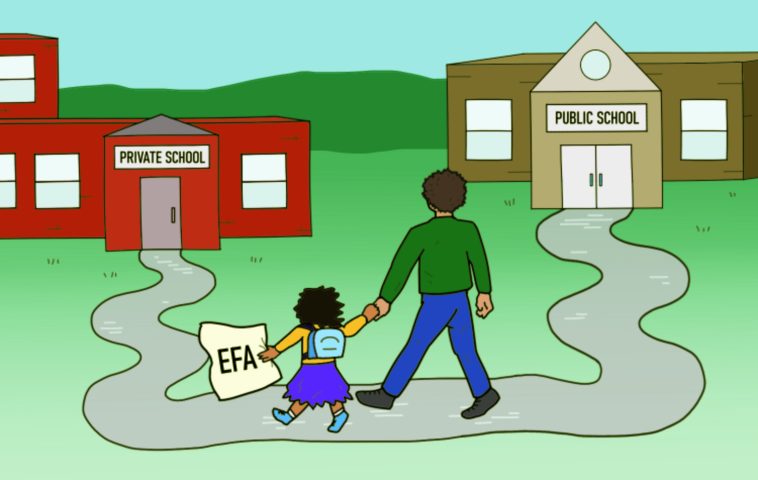
Recent announcements from the organization running New Hampshire’s universal school voucher program have brought critical issues to the forefront. With the program reaching a newly stipulated enrollment cap of 10,000 students—and nearly 300 additional families waiting—the flaws in the system have become impossible to ignore. Many families, previously excluded by income guidelines, now find themselves benefiting from taxpayer dollars, despite having considered private school tuition an option regardless.
This development forces us to confront several tangled issues, particularly regarding the fiscal management and allocation of public funds. The voucher program, designed ostensibly to broaden access and create a more flexible educational environment, appears to have expanded too quickly without addressing the underlying challenges. The enthusiasm with which some have embraced the program risks overshadowing the significant risks involved, such as diverting essential resources away from community schools that serve as the backbone of our public education system.
- The enrollment cap indicates pent-up demand for alternative educational options.
- New families joining the program highlight a shift in income demographics.
- Larger tax funds may be redirected, potentially weakening public schools.
These points require serious consideration. By offering vouchers to families that might have already been able to afford private education, we are effectively subsidizing a choice that, in many cases, does not need state intervention. This creates an environment where taxpayer dollars flow to those least in need and where educational inequality may be exacerbated rather than alleviated.
Fiscal Management and Equitable Funding in Public Education
One of the fundamental issues at the crux of the debate over school vouchers is the manner in which public education is funded in New Hampshire. The current reliance on local property taxes creates stark disparities between wealthy and less affluent districts. This method of financing leads to a perpetual “rich town, poor town” dynamic that undermines the core principle of equal opportunity in education.
Imagine a structure where funding is allocated evenly across the state through a graduated income tax that funnels money directly into an education fund. In such a model, wealthier communities contribute more relative dollars, but every school, regardless of its location, receives equitable support. This could naturally reduce the allure of voucher programs, which tend to attract those from more advantaged financial backgrounds.
A more balanced funding model would address several key points:
- Equity in Resources: Every community would have access to critical resources, ensuring that no student is disadvantaged due to their locality.
- Stabilized Budgets: With steady funding from a state-level tax, schools could plan long-term improvements without fear of drastic fluctuations based on local property values.
- Reduced Voucher Demand: As public schools receive sufficient support, the need for alternative voucher programs may decline naturally.
- Promoting Community Investment: A fair funding system builds trust and encourages local investment in school infrastructure and educational quality.
Without addressing the root problem of inequitable funding, critics of public schools have often resorted to turning community sentiment against the very institutions that form the bedrock of our democracy.
Community Concerns and the Impact on Local Public Schools
Across New Hampshire, educators and community leaders are voicing deep concerns about the growing momentum behind school vouchers. The push for vouchers is accompanied by a barrage of grievances and accusations directed at public schools, ranging from disputes over curriculum to broader claims of mismanagement. Many families who once relied on local institutions for a well-rounded education now find themselves caught in a whirlwind of politicized debates over school funding and curriculum appropriateness.
The following bullet points outline some of the key issues affecting community schools:
- Curriculum Clashes: Parents and local school boards are increasingly at odds over what constitutes an acceptable curriculum, demonstrating the fine points of distrust between the public and educators.
- Public Health Misinformation: In some instances, misleading narratives have emerged about the safety and reliability of public school programs, further eroding community support.
- Growing Political Division: Legislative proposals aimed at “parental rights” have often been introduced in a highly charged political atmosphere that prioritizes blame over objective outcomes.
- Erosion of Traditional Values: The longstanding belief in a public education system that serves all students equitably is being chipped away by policies that favor privatization over enhancement of the public framework.
These issues are deeply intertwined with the broader challenge of sustaining a robust public education system in a state with diverse economic realities. It is essential to remember that what began as an attempt to offer more choice and flexibility within the education system has come to represent a potential pathway toward a more privatized model that may not serve every community equally.
Philosophy of Public Education Versus the Push for Privatization
The debate over school vouchers is more than a fiscal or administrative issue—it is a question about the nature and direction of public education itself. Public education was born out of the realization that the true strength of a society resides in the collective knowledge and skills of its citizens. For generations, it has been seen as a public good, a cornerstone of democratic society that guarantees every child a chance at success, regardless of their socioeconomic background.
However, the rise of voucher programs points to a troubling shift. A political consultant recently argued that the monopoly of public schools is over, suggesting that the traditional model is obsolete. This perspective seems to undermine the historically proven approach where public education has been a vehicle for equal opportunity and community building.
The tension between the long-held ideals of universal public schooling and the current push for voucher programs underscores several critical questions:
| Aspect | Public Education | Voucher Programs |
|---|---|---|
| Funding Model | Primarily relies on local property taxes with inconsistent equity | Diverts taxpayer money, potentially benefiting families with means |
| Community Impact | Designed to serve all children equally | May intensify local disparities by attracting wealthier families |
| Philosophy | Based on the principle of a shared public good | Emphasizes individual choice even at the cost of statewide cohesion |
| Sustainability | Built on gradual improvements and consistent policy refinement | Rapid implementation without addressing underlying issues |
The table illustrates the fine shades between public education and voucher systems. While public education has its own set of complicated pieces, any move toward privatization, if not carefully managed, threatens to unravel the very benefits that public schooling has historically provided.
This is not to say that alternative education models should be dismissed outright. There is a place for school choice in a dynamic society. What is necessary, however, is a sober evaluation of what voucher programs truly offer—and what they cost in terms of long-term educational quality and equity.
Addressing the Tangled Fiscal Responsibility Debate
A critical concern emerging from the voucher debate is the question of fiscal responsibility. The decision by state policymakers to open education freedom accounts to all families regardless of income seems, at first glance, to be a move toward inclusivity. Yet, when viewed through the lens of economic efficiency, it raises several overwhelming questions.
For instance, is it truly wise to allocate large sums of taxpayer money to families that, by their very means, might never have needed the state’s financial support for private school education? This approach has led to a series of tangled issues and unintended consequences, primarily by undermining the investment in public schools—institutions that have long served as the great equalizer in our society.
Some critical elements that need to be sorted out include:
- Taxpayer Allocation: Examining how funds are distributed and determining whether subsidies are being misappropriated.
- Economic Fairness: Evaluating whether a more equitable funding structure, such as a graduated income tax devoted to public education, might yield the long-term benefits that are currently being sacrificed.
- Sustainability of Funding: Ensuring that public schools are not left without the resources they need to provide a quality education for all children, particularly in less affluent communities.
This discussion calls for an honest, community-wide dialogue, where stakeholders can get around the overwhelming fiscal truths rather than simply defending preconceptions. Too often, discussions about education policy become riddled with tension when underlying financial mismanagement is brushed aside. Any effort to improve our schools must face head-on the imposing challenges of how they are funded and operated.
Community Voices and the Policy Impact on Everyday Families
In New Hampshire, as in many states grappling with school voucher issues, the voices of parents and teachers are becoming increasingly critical. Across community meetings and school board sessions, a recurring theme is the fear that vouchers might further skew the playing field in favor of families that are already well positioned. This concern touches on both the economic and social aspects of education policy.
Many parents now find themselves caught in the crossfire of debates over curriculum decisions, the perceived overreach of “parental rights” measures, and the shifting focus from community improvement to strategic, politically motivated reforms. These small distinctions in opinion, often dismissed as mere partisan squabbles, have real-world consequences for the day-to-day operations of schools and the quality of education provided to children.
The following points encapsulate the concerns of many families impacted by these policy changes:
- Quality of Education: How will diverting resources away from public schools affect the actual classroom experience?
- Community Cohesion: Public schools traditionally serve as community hubs. What happens when that shared space begins to deteriorate due to funding disparities?
- Long-term Economic Impact: Are tax dollars being used wisely, or is the shift toward vouchers setting a precedent that may harm the future funding of public education?
- Transparency and Accountability: With the involvement of private consultants actively recruiting students, how can communities ensure that their interests remain front and center?
These issues are not abstract, but rather a pressing reality that many families face on a daily basis. It is essential that elected leaders take into account these community concerns rather than simply viewing them as hurdles on the path to educational reform. The well-being of our children and the integrity of our public education system depend on getting these tangled issues resolved with wisdom and care.
Exploring the Business of Education: Consultancy and Privatization
A notable development reported recently is the emergence of consultants focused on recruiting students for public school districts—a detail that might seem counterintuitive at first. A political consultant based in Memphis, for instance, has built a business around a new reality: convincing parents to enroll their children in public schools. This strategic move, encapsulated in the tagline “We recruit students,” reflects a broader trend toward treating education as a market commodity rather than a public asset.
At its core, this approach raises several overwhelming questions about the role of money and privatization in what has traditionally been a public good. By outsourcing parts of student recruitment and enrollment to private firms, the system risks transforming a community service into a commercial enterprise. This shift might provide short-term boosts in public school enrollment numbers, but it also comes with several tangled issues:
- Monetary Incentives: Private consultancies may focus on numbers rather than quality, pushing for enrollment targets without addressing the finer details of educational quality.
- Accountability Gaps: When private firms become involved, accountability becomes diffused. Who then ensures that public education remains the core focus?
- Market Dynamics: The competition between public and private entities in education could lead to a scenario where profit motives overshadow the traditional values of shared community learning.
The emergence of businesses like Caissa K12, which boast over 100 district clients, should serve as a wake-up call. They highlight how easily a public service can be subject to market forces and commercial interests. If unchecked, these developments may eventually reframe the conversation about public education, shifting it from one of equal opportunity to a contest of financial might and private interests.
Reassessing the Role of Parental Rights in Education Reform
The discussion about school vouchers is closely linked to the broader movement championing “parental rights” in education. Lawmakers have been quick to endorse measures such as book bans and library privacy rollbacks, arguing that these initiatives empower parents to take control of their children’s education. However, this narrative can sometimes act as a smokescreen, diverting attention from the more intricate issues at play.
In reality, the emphasis on parental rights often oversimplifies a complex collection of challenges. While parents undeniably deserve a say in their children’s education, this approach risks sidelining the collaborative processes that have historically improved educational quality. Here are some of the key aspects that deserve closer inspection:
- Simplistic Solutions: Many parental rights measures focus on symbolic gestures rather than addressing the real problems in curriculum development or funding disparities.
- Divisive Rhetoric: Labeling public education initiatives as part of a broad left-wing conspiracy can create a tense atmosphere that discourages constructive dialogue.
- Impact on Teacher Autonomy: When community disagreements are channeled solely into parental rights debates, the authority and professional judgment of educators can be undermined, making it harder for schools to maintain high standards of learning.
The challenge, therefore, lies in finding a balanced approach that respects parental input while ensuring that educational policymaking remains inclusive and informed by a diverse set of voices. Education reform, if it is to succeed in an environment loaded with issues, must not sacrifice nuanced policy analysis for the sake of winning political points.
Charting a Path Toward a Balanced and Inclusive Education System
Given these numerous challenges and blind spots, what can be done to foster a more balanced education system in New Hampshire? It starts with acknowledging that the issues are not merely a matter of opinion but represent fundamental questions about how we conceive of public education. Addressing these tricky parts requires a collective effort, spanning from policy circles to grassroots community meetings.
There are several steps that could help rein in the problematic aspects of the current voucher debate while reinforcing the value of public education:
- Revise Funding Models: Transitioning from a heavy reliance on property taxes to a more balanced model based on a graduated income tax would help ensure equitable distribution of funds. This model could reduce disparities between districts and decrease the appeal of voucher programs among wealthier families.
- Enhance Transparency and Accountability: Both in the management of voucher programs and in public school funding, increased oversight would help maintain public trust. Clear guidelines and robust audits can help ensure that taxpayer dollars are spent wisely.
- Encourage Community Engagement: Dialogue between educators, parents, and policymakers is essential. Town hall meetings, structured forums, and community advisory committees can help all stakeholders get into the fine points of policy discussions without the noise of political grandstanding.
- Invest in Public Education Infrastructure: Instead of diverting funds to voucher programs, a robust investment in public schools—improving facilities, updating curricula, and supporting teacher development—could make public institutions more competitive and appealing.
By taking such practical steps, New Hampshire can aim to strike a balance that respects parental choice while preserving the communal benefits of a well-funded and inclusive public education system. The goal is not to dismiss school choice outright, but to make sure that every policy change is weighed carefully against its potential impact on the community as a whole.
Looking Ahead: Embracing Change Without Losing Core Ideals
The debate over school vouchers is a microcosm of the broader challenges facing public education in modern America. It is a contest of ideas, strategies, and competing priorities—as well as a struggle to reconcile the traditional values of public schooling with rapidly shifting economic and political landscapes. Just as my failed attempt to string patio lights forced me to reconsider my assumptions, so too must policymakers and community leaders reexamine the blind spots in our education framework.
As we move forward, several key reflections deserve attention:
- Commitment to Equity: By ensuring that every child, irrespective of where they live or what their family earns, has access to quality education, we secure the future of our society.
- Maintaining a Public Good: Education remains a cornerstone of democracy precisely because it is a shared responsibility, not a commodity to be traded.
- Open Dialogue: Only by candidly discussing the small distinctions and hidden complexities can we hope to find a way forward that honors both innovation and tradition.
- Long-term Vision: While immediate political gains may tempt decision-makers to adopt quick fixes like vouchers, the long-term sustainability of our education system must remain the guiding star.
Indeed, the lessons from both my weekend project and the unfolding voucher debate underscore a central truth: we must balance confidence with humility. Recognizing that there is always more to learn, we create the space for policies that are both flexible and resilient—a system capable of adapting to changing times without sacrificing its fundamental purpose.
Concluding Thoughts: Steering Through the Twists and Turns of Education Reform
The challenges presented by New Hampshire’s school voucher program are not insurmountable, but they do require us to dig into difficult questions about fiscal responsibility, community trust, and the true meaning of educational equity. The experience of fumbling with patio lights may seem trivial, yet it elegantly symbolizes the larger issue at hand: the dangers of ignoring the obvious in favor of a preconceived notion of how things should work.
Much like managing a DIY project, reforming public education demands a careful, step-by-step approach. It involves acknowledging the overwhelming complexities, getting into the nitty-gritty of funding and policy details, and admitting that we might not have all the answers. Only through honest, community-driven debate can we hope to rejuvenate a system that has served as the backbone of our society for generations.
In this era of rapid change and contentious policy debates, it is more critical than ever for public officials, educators, and community members to come together to sort out these issues. Instead of allowing blind spots to widen into gaping chasms, we must find our path forward by combining our best ideas with a shared commitment to keeping the public good at the center of education reform.
As New Hampshire continues to grapple with these challenging policy questions, let us remember the simple yet profound lesson of the patio lights: the distance between what we assume and what we observe can be vast. To bridge that gap, we must strive for a balance between optimism and accountability, ambition and pragmatism, all while ensuring that our public education system remains as inclusive, resilient, and adaptable as the society it is meant to serve.
Only by embracing this balanced vision can we hope to create an education system that not only meets the demands of today but is also built to withstand the inevitable twists and turns of tomorrow’s challenges.
In conclusion, as we figure a path through the tangled issues of school vouchers, funding inequities, and community concerns, we should never lose sight of the foundational ideals that have made public education a cornerstone of our democracy. By rethinking fiscal policies, engaging in open dialogue, and focusing on long-term sustainability, New Hampshire can serve as a model for navigating the tricky parts of modern education reform—ensuring that every child receives the promise of a bright future, illuminated not by flickering patio lights, but by the enduring glow of a well-supported public school system.
Originally Post From https://newhampshirebulletin.com/2025/08/05/beware-of-all-the-blind-spots-in-new-hampshires-school-voucher-vision/
Read more about this topic at
Beware of all the blind spots in New Hampshire’s school …
Beware of all the blind spots in New Hampshire’s school …

