
2025 NCAA DI Men’s Soccer Championship: A Bold New Era in College Sports
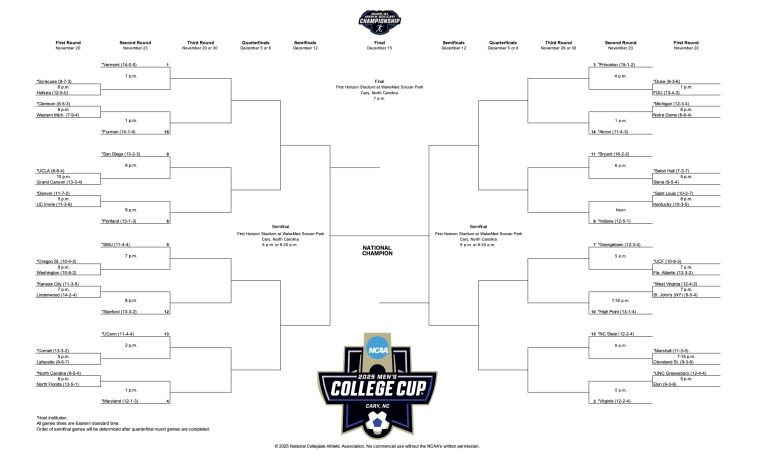
The announcement of the 2025 NCAA Division I Men’s Soccer Championship bracket has sparked considerable discussion across the college sports community. As the field of 48 teams is unveiled—with automatic qualifiers from 22 conferences and 26 teams chosen at-large—a blend of tradition and fresh energy is emerging. Defending national champion Vermont, now awarded the No. 1 seed, sits at the forefront with a flawless record, while historic programs and debutants alike are ready to take on the tricky parts and tangled issues of this nerve-wracking tournament.
In this opinion editorial, we take a close look at the tournament’s structure, the subtle details behind the seeding process, and the scheduling twists and turns that define this postseason spectacle. We also examine the impact of media coverage on college sports culture and the broader implications for state and federal education policy as competition, opportunity, and exposure converge around collegiate athletics. Let’s get into the nitty-gritty of this high-stakes event.
Team Dynamics and the Selection Process: A Closer Look
At its core, the NCAA selection process for the men’s soccer championship involves a delicate balance between rewarding past performance and anticipating future potential. Awarding the top seed to Vermont (with a record of 14-0-5) is a decision that reflects the team’s impressive run in the America East Conference. Their undefeated record and top winning percentage (.868) underscore the kind of confident performance that has college soccer pundits talking about the fine points of potential championship campaigns.
Meanwhile, traditional powerhouses like Virginia, Princeton, and Maryland round out the top four seeds. Seven-time national champion Virginia (12-2-4) brings a storied history and a legacy of winning, all while contending with the tricky parts of maintaining excellence in an increasingly competitive landscape. Princeton, enjoying a formidable record (15-1-2), is driven by the exciting prospect of capturing their maiden national title, making their run in this tournament one of the most anticipated narratives. Four-time national champion Maryland (12-1-3) carries the weight of expectations, and each match they play will dive into the subtle details of strategy and endurance.
This selection process is loaded with issues that require a careful eye. How do we weigh season-long consistency against moments of brilliance? Can historical performance predict postseason success? These are some of the tangled issues that experts and fans alike are sorting out. With a field structured to reward both conference champions and at-large selections, the NCAA has managed to create a scenario that invites both optimism and nerve-racking uncertainty.
Understanding the Seeding Rationale
The fine shades behind the seeding decisions are more than just numbers—each seed tells a story of triumph, perseverance, and even controversy. Vermont’s top seed is an acknowledgment of their sustained excellence and their ability to get around the tricky parts of maintaining an undefeated record. Similarly, Virginia’s designation as the second seed is a nod to their rich historical pedigree, even as teams like Princeton and Maryland face the delicate task of outperforming their competitors in every phase of the tournament.
The seeding is not, however, solely about bragging rights. It plays a key role in how the tournament is structured, from awarding first-round byes to determining the matchups that can either simplify or complicate a team’s journey. The top 16 seeds avoiding a first-round battle on campus sites is a critical, super important detail for those teams looking to conserve their energy for what promises to be an intense postseason.
| Seed | Team | Record | Notable Achievement |
|---|---|---|---|
| 1 | Vermont | 14-0-5 | America East Champion & Undefeated Record |
| 2 | Virginia | 12-2-4 | Seven-Time National Champion |
| 3 | Princeton | 15-1-2 | Chasing First National Title |
| 4 | Maryland | 12-1-3 | Four-Time National Champion |
This table outlines the top seeds and demonstrates how the board of selection relies on a balance of record, historical achievement, and tournament performance. These are subtle parts of the overall process that may appear simple on the surface, yet are riddled with off-putting decisions that continue to spark debate among college soccer enthusiasts and policy analysts alike.
Historic Tournament Appearances and the Nerve-Racking Journey
One of the standout elements of the 2025 tournament is the blend of historic programs with an illustrious past and teams on the cusp of making history for the first time. For instance, Saint Louis, with a record of 10-2-7, is set for what will be a record-high 52nd tournament appearance—a testament to its enduring tradition. Both Indiana (12-5-1) and UCLA (8-6-4) are also celebrating milestone appearances, marking their 50th entries in postseason play. Indiana, notably, continues a streak of 39 consecutive bids that has become a storied part of their program’s legacy.
The journey through the bracket is loaded with issues and moments that are both intimidating and exciting. The responsibility of sustaining a long conference tradition while facing off against modern rivals brings with it a mix of nerve-racking pressure and adrenaline-fueled anticipation. For these historic programs, every match is a testament to a legacy built over decades—a legacy that is now being shaped by the continued evolution of college soccer.
Bridging Legacy and Modern Competition
The story of college soccer is one of merging past prestige with future promise. The appearances by teams such as Indiana and UCLA are more than just routine; they are important markers of institutional commitment to athletic excellence. Meanwhile, modern selection nuances, like the detailed seeding process, mean that no matter how storied a program might be, every team must get into the nitty-gritty of game day performance.
Working through these matchups provides a captivating glimpse into how traditional powerhouses continue to inspire newer programs while simultaneously facing their own set of challenges. The tension inherent in these matchups is filled with small distinctions that sometimes make the difference between a comfortable win and a dramatic upset. This blend of tradition and innovation makes the tournament a must-watch event for anyone interested in both the sport and its broader implications on campus culture and student life at colleges nationwide.
Rookie Teams: Fresh Faces on a Nerve-Racking Stage
For the first time in years, three programs will be making their tournament debuts. Florida Atlantic, Lindenwood, and Siena have all earned their spots by excelling in their respective conferences. Florida Atlantic’s entry comes as a result of their strong showing in the American Conference, while Lindenwood is celebrating its inaugural tournament appearance after winning the Ohio Valley Conference in its first season as a full Division I member. Siena’s appearance, as winners of the Metro Atlantic Athletic Conference, adds another intriguing layer to the dynamic mix of established programs and fresh challengers.
These debut teams bring with them a fresh challenge—not only to the established order but also to the structures and policies that have historically favored perennial contenders. When teams making their first appearance step onto such an intimidating stage, the entire atmosphere is charged with excitement and anxiety. The new faces must find their way through a maze of scheduling hurdles and competitive matchups, all while grappling with the overwhelming pressure of debuting on such a critical platform.
The Impact of Newcomers on Tournament Dynamics
Rookie teams in a high-profile tournament like this are a mixed bag of potential surprises and early pitfalls. The debut of these teams isn’t just a positive sign for the diversification of college soccer; it challenges some of the established ways the competition has always been run. These teams force a rethinking of strategies, both on the field and in the boardrooms where policy decisions are made. Their participation underlines the ever-changing landscape of college sports, where the old and the new are constantly in conversation.
Even as they work to figure a path through the tournament’s demanding schedule, these newcomer teams are putting the spotlight on geopolitics of collegiate sports. Their fresh perspectives and unburdened approaches could provide novel insights into how athletic programs develop under the dual pressures of tradition and rapid change. This intersection of legacy and innovation is sure to yield plenty of interesting stories as the tournament unfolds.
Scheduling and Venue Dynamics: Tackling the Tricky Bits
One cannot discuss the 2025 men’s soccer championship without highlighting the carefully designed schedule that aims to manage the overwhelming logistics of a 48-team field. All of the first-round matches will take place on Thursday, November 20, on various campus sites. This initial phase sets the pace for an event that is both spread out in time and geographically. Subsequent rounds—second on November 23, third on November 29 and 30, and quarterfinals on December 5 and 6—further compound the scheduling twists and turns, challenging coaches and players alike to maintain peak performance throughout a packed calendar.
Even as teams prepare for the nerve-racking reality of multiple successive matchups, the tournament organizers have clearly worked through the complicated pieces of scheduling. These arrangements ensure that no team faces an unfair competitive disadvantage simply due to timing or travel requirements. Nonetheless, the scheduling remains one of the more intimidating aspects of the championship, demanding both logistical prowess from the organizers and mental fortitude from the athletes.
Dealing with the Overwhelming Travel and Campus Dynamics
Every step of the way, teams must find their way through the practical challenges of travel and campus-based competition. For some schools, the necessity to shift from one campus site to another not only introduces physical fatigue but also adds a layer of psychological stress. Coaches and athletic directors need to take a closer look at these scheduling considerations, ensuring that players get both the rest and focus they need to perform at their best.
Additional concerns include external factors such as weather, transportation, and local support, which can all influence the game-day atmosphere. The NCAA’s careful scheduling attempts to mitigate these potential issues, but they remain a nerve-racking component that both teams and fans must be ready to accept as part of the overall tournament experience.
- First-round games on campus sites help preserve the home-field advantage for some teams.
- Multiple rounds in a short span demand robust physical conditioning and mental readiness.
- Timing and travel logistics play a super important role in ensuring fair play.
Media Coverage and Its Impact on College Sports Culture
Alongside the athletic contest, media coverage of college sports has evolved into a critical, super important element of how these events are experienced. With ESPNU slated to deliver live coverage of the semifinals and final on December 12 and 15 at First Horizon Stadium at WakeMed Soccer Park in Cary, North Carolina, the championship is poised not only to draw large live audiences but also to generate extensive online interaction. This broadcasting decision underscores the NCAA’s ambition to promote the tournament as a nationwide event with far-reaching cultural implications.
Media coverage helps to demystify the maze of scheduling conflicts, fine details, and hidden complexities that often cloud the public’s understanding of college sports. It provides a platform where experts can weigh in on subtle differences between teams, discuss the state and federal education policies that tie into athletic funding, and analyze the broader impact of postseason play on student-athlete experience. In short, the live broadcast is as much a part of college soccer’s modern narrative as the games themselves.
The Role of Digital Platforms in Shaping Public Perception
In addition to traditional broadcasting, digital platforms and social media have become indispensable in demystifying the many twists and turns of the tournament structure. Online streams, interactive brackets, and real-time commentary allow fans to partake in the excitement and share their opinions, making the championship an inclusive experience for a broader audience. This increased accessibility is not without its challenges, as it demands that both organizers and teams gear up to meet expectations across multiple media channels.
Digital media not only provides behind-the-scenes insights but also acts as a feedback loop that can influence future tournament setups. From live updates to expert commentary on tactical moves, the small distinctions in public sentiment are shaping a progressive conversation about college sports culture. These platforms help streamline the often intimidating and confusing bits of tournament organization into more manageable pieces, making the experience more engaging for everyone involved.
Policy and the Future of Collegiate Soccer: A Broader Perspective
The unfolding of the 2025 NCAA DI Men’s Soccer Championship is not just about athletic achievement; it also opens the door to a range of state and federal education policy discussions. With media coverage and national attention at an all-time high, policymakers are increasingly interested in how collegiate athletics influence educational outcomes, student life, and campus communities. The championship, in this sense, acts as a microcosm of broader societal trends, where funding, regulation, and academic priorities are consistently under debate.
While some critics argue that the massive attention given to sports detracts from academic priorities, others suggest that high-profile tournaments provide invaluable exposure and financial support to college programs. In this context, the NCAA’s efforts to manage the scheduling twists and funding challenges become more than merely operational. They are part of a larger narrative about the role of athletics in shaping educational landscapes and driving institutional change.
Balancing Athletic Success with Educational Priorities
State and federal education policies are increasingly acknowledging that college sports can serve as a powerful tool for community engagement, campus pride, and personal development. However, this success story is not without its own set of tricky parts and intervening challenges. University administrators and policy makers alike must find their way through the maze of priorities, ensuring that the high stakes of athletics do not overshadow the academic missions of their institutions.
This dual role is full of problems, especially when budgets are tight and the line between athletic funding and academic investment becomes blurred. In response, policies are slowly adapting to account for the needs of student-athletes, ensuring they have access to the same educational opportunities as their peers. The ongoing debates and legislative efforts highlight the fact that while collegiate sports are an off-putting subject for some policymakers, they are undeniably an essential part of the higher education ecosystem.
- Integrating athletic success with academic funding requires detailed policy considerations.
- Enhanced media exposure and revenue streams can indirectly benefit educational programs.
- Efforts to support student-athletes are gradually shaping a more balanced college experience.
Community and Institutional Impact: A Close Examination
The ripples of the NCAA DI Men’s Soccer Championship extend far beyond the field. Communities rally around their local teams, and institutions see the tournament as a key moment to showcase their broader identity. This public phenomenon is not merely about the games but about fostering civic pride and drawing attention to improvements in the athletic and academic domains. As local businesses gear up for increased foot traffic during game days and universities benefit from additional media exposure, the role of collegiate sports in the community becomes a compelling focal point for discussions about economic and social benefits.
Universities, in tandem with their local communities, must manage the challenges posed by rapid scheduling changes and the overwhelming excitement surrounding the championship. In many cases, campus administrators are required to sort out complex logistical issues and coordinate with local authorities—tasks that involve negotiating a host of confused bits and complicated pieces. Such coordination efforts not only ensure a smoother event but also strengthen community ties and illuminate the shared goals of academic and athletic growth.
Local Economic Benefits and Campus Pride
For many institutions, hosting games on campus sites is a nerve-racking yet exciting opportunity that boosts local economies. From increased ticket sales to enhanced visibility on digital platforms, the benefits are tangible and far reaching. The enthusiasm surrounding these events often spills over into local businesses, with restaurants and retailers experiencing an influx of activity during game days.
The boost in campus morale is equally significant. The tournament season is a time when students, alumni, and local residents come together in support of their teams. This community solidarity reinforces the idea that collegiate sports are not just competitive events but meaningful cultural gatherings that celebrate tradition, hard work, and the spirit of overcoming overwhelming odds.
The Future Landscape: Trends and Predictions for College Soccer
As the 2025 tournament unfolds, several trends can be observed that are set to shape the future of college soccer. The increasing integration of digital media in sports broadcasting, the evolving role of policy in balancing educational priorities with athletic success, and the ongoing influence of historic traditions all point to a transformative period in the sport’s evolution. The tourney is a ticking mix of promotions that have both enthusiastic support and critical challenges to overcome as teams try to find their way through the maze of matchups and off-field pressures.
One clear trend is the rising prominence of newcomers in the tournament. The fresh energy brought by teams like Florida Atlantic, Lindenwood, and Siena is a sign that college soccer is opening its doors to a wider array of participants. This diversification not only enhances the competitive balance but also reflects shifts in recruiting, training, and support structures at collegiate levels. In a time when legacy programs face both internal and external pressures, the entry of rookie teams serves as a reminder that change, though often intimidating, is an inevitable part of progress.
Embracing Change Amid Traditional Expectations
The interplay between tradition and innovation is one of the small distinctions that define college sports today. Institutions steeped in decades of history are now required to work through new challenges posed by modern scheduling and digital media dynamics. At the same time, the entrance of fresh talent into the championship bracket has stirred up the competitive landscape in ways that promise to yield exciting gameplay and unpredictable outcomes. For many, this is a welcome change—a chance to witness a rebalancing of power and an injection of innovation into a revered tradition.
As future tournaments unfold, we can expect to see a more inclusive range of teams and a schedule that reflects both the physical and psychological hurdles of modern competition. Whether it’s balancing travel logistics, managing the overwhelming expectations set by decades of excellence, or simply adapting to new digital and media strategies, the road ahead is full of twists and turns that demand both adaptability and resilience from all involved.
Conclusion: A Celebration of Competition and Community
The 2025 NCAA Division I Men’s Soccer Championship is shaping up to be an event that captures not only the athletic spirit of college sports but also the intricate interplay between tradition, policy, and community engagement. From the detailed seeding process that honors both legacy and potential to the nerve-racking schedule that tests every team’s endurance, this tournament is a microcosm of the challenges and triumphs inherent in high-level collegiate competition.
As Vermont, Virginia, Princeton, Maryland, and the rest of the field prepare to meet on the pitch, stakeholders—from coaches and administrators to policy makers and local community leaders—are reminded of the vital role that college sports can play in shaping a positive, dynamic future for education and society at large. The championship is a reminder that every match, every tournament round, and every behind-the-scenes decision is a part of a larger narrative—one that requires collaboration, understanding, and most importantly, a willingness to embrace change.
By offering equal focus to historic programs as well as debutants, the 2025 tournament sets the stage for a celebration that goes beyond the final whistle. It is a chance for communities to rally together, for institutions to demonstrate their commitment to excellence in both athletics and academics, and for fans to immerse themselves in a shared experience filled with unexpected surprises, fine shades of strategy, and substantial moments of pride.
In the coming days and weeks, as campuses buzz with anticipation and digital platforms light up with live updates and commentary, the true value of this championship will reveal itself. Not just in the scores or the bracket outcomes, but in the spirit of competition, the small distinctions that separate champions from contenders, and the collective resolve to figure a path through the inevitable twists and turns of college sports. Ultimately, this tournament is as much a part of the educational journey as it is a sporting event—a living example of how learning, perseverance, and teamwork can converge to create something truly memorable.
As we take a closer look at the unfolding narrative of the 2025 NCAA DI Men’s Soccer Championship, we are reminded of the delicate balance between tradition and innovation—a balance where history meets modern challenge, and where every kick of the ball is a step toward a future filled with promise, excitement, and the kind of spirited community that defines collegiate athletics in America.
In conclusion, the championship is not simply an athletic contest but a vibrant tapestry woven from competing narratives, community engagement, and evolving educational policies. It challenges everyone involved—from veteran teams who have mastered the subtle parts of the game to rookie entrants who must find their way through an intimidating and ever-changing landscape. With every schedule detail, every media broadcast, and every strategic decision, the 2025 tournament invites us all to appreciate the larger game at play: one that extends far beyond the soccer field and into the very heart of what it means to be part of a community that values competition, tradition, and the courage to embrace the new.
Originally Post From https://www.ncaa.com/news/soccer-men/article/2025-11-17/2025-ncaa-di-mens-soccer-championship-bracket-announced
Read more about this topic at
2025 DI men’s soccer championship: Bracket, schedule …
Men’s NCAA Tournament Bracket 2024-25