
College Basketball Early Season Trends: A Candid Analysis of Top Performers
The early season in college basketball is never short on surprises, and as we take a closer look at the current slate of games, the performances, strategies, and unexpected road wins are creating plenty of chatter among fans and experts alike. In this editorial, we’ll examine some of the standout teams and discuss how their early successes set the stage for a season filled with both promise and its share of tricky parts. We’ll also touch on the subtle details that underscore each team’s strengths and challenges, providing our readers with a comprehensive yet neutral opinion on the early trends in men’s college basketball.
College basketball in early November has proved that even traditional powers can experience tangled issues on the road. However, some teams have already demonstrated the ability to overcome intimidating opponents with impressive displays, even on hostile soil. In what follows, we dive into the early season performances of teams like the Arizona Wildcats, Purdue Boilermakers, Houston Cougars, and others, while comparing their strengths and weaknesses using key statistics and thoughtful analysis.
Impact of Early Road Wins: The Arizona Wildcats’ Impressive Start
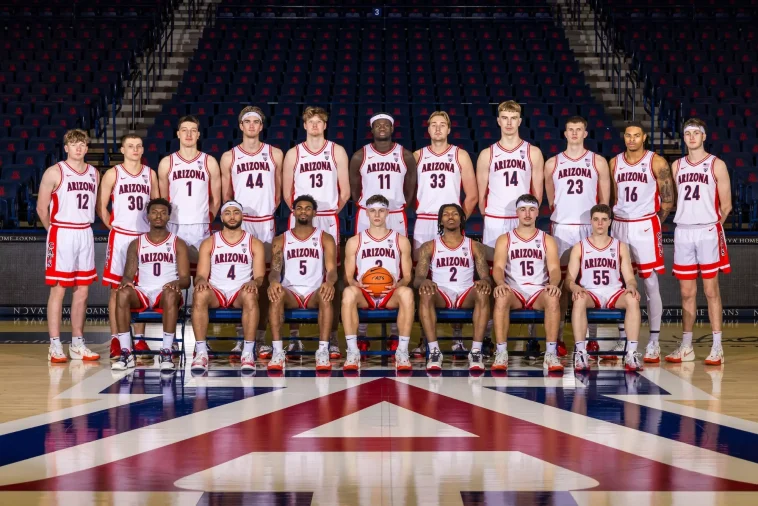
When it comes to early season resume builders, the Arizona Wildcats are a case in point. With multiple road wins over top-three opponents during their first five games, the Wildcats have demonstrated an exceptional ability to find their way through tough matchups. Their recent victory over UConn on the road was particularly noteworthy—not just for the win, but for the smart, selfless play of their point guard, Jaden Bradley.
Bradley’s performance in these games—scoring consecutive points at critical moments—illustrates that his style of play isn’t just about flashy moves. It’s about making the most of every opportunity on the court. Coach Tommy Lloyd highlighted the importance of having a point guard who can remain composed and take crucial shots, and Arizona’s early season success speaks volumes about their focus on those subtle details that make it to the scoreboard in close contests.
Analyzing the Wildcats’ Road Game Strategy
Arizona’s ability to secure wins on the road is not just due to individual heroics; it’s a testament to their collective mindset and well-practiced strategies. Their schedule includes wins over teams like Florida, UCLA, and UConn—all achieved without the comfort of a home crowd. This achievement is noteworthy because it demonstrates that the team is not easily rattled by the twists and turns of playing in unfamiliar environments.
According to ESPN Research, they’re only the third team in AP Poll history to notch multiple wins over top-three opponents in the opening five games, a milestone not reached since Kansas in the 1989-90 season. This statistic underlines the super important combination of talent, depth, and determination, factors that have allowed the Wildcats to thrive even when the stakes are at their highest.
Understanding Purdue’s Strategic Comeback in Men’s Basketball
The Purdue Boilermakers have also emerged as a formidable force, bolstered by the return of key player Trey Kaufman-Renn. His comeback has not only added valuable depth to the Boilermakers’ lineup but has also energized the team with his consistent performance from both ends of the court.
Fans have noticed Trey’s major influence when he picked up where he left off last season—putting up double-digit stats that include points, rebounds, and assists. His ability to grip the ball, create plays, and rebound effectively adds a layer of balanced offense and defense that Purdue desperately needs to regain its historic stature in men’s basketball. As the Boilermakers look forward to challenging matchups against teams such as Iowa State and Auburn, the return of this star player is expected to be one of the key drivers of their campaign.
Breaking Down Purdue’s Tactical Adjustments
Purdue’s coaching staff has been busy tweaking their game plan. The focus now is on refining their offensive schemes and tightening up the defense, especially when facing teams that rely on diverse attack styles. This period of adjustment is full of tricky parts—identifying weak spots on both ends involves working through complicated pieces of game-tape, isolating the tiny details that make a difference in high-stakes games.
Looking ahead, Purdue’s schedule is filled with matchups that could further test their ability to make your way through stiff competition. The Boilermakers’ approach to these upcoming contests may offer important lessons on managing your way through periods of transition, which is critical for any team aiming to cement its place among college basketball’s elite.
Evaluating Houston Cougars’ Freshman Impact: A Closer Look at New Talent
Houston Cougars are another team whose early season performances have generated serious discussion, particularly due to the high impact coming from their freshmen. Kingston Flemings, although not the highest-ranked recruit initially, has proven to be a key contributor by scoring efficiently and orchestrating the offense with calm maturity. Such performance from a first-year player is both promising and reassuring for a team that hopes to contend at high levels throughout the season.
Recent games have seen the Cougars not only open the scoring but also continue to build momentum, establishing themselves as one of the favorites in the AP Poll rankings. With standout numbers—averaging impressive points and key assists—the freshman has been pivotal in ensuring that Houston’s game plan remains both agile and deliberate.
Fresh Talent Driving Houston’s Early Season Success
The success of Houston Cougars is not solely down to one player, but rather the collective energy derived from integrating new talent into a cohesive unit. Their ability to shoot from 3-point range and consistently employ effective half-court strategies has been something fans and analysts alike have found impressive. In sporting terms, it’s like having a bright new spark that manages to find its rhythm amidst the twists and turns of a long, challenging campaign.
The Cougars’ focus on relying on both seasoned veterans and enthusiastic freshmen creates a balanced environment where the pressure of high expectations can be shared and managed. Such a strategy, which is super important for team morale, could set them apart as one of the leading contenders this season.
Tough Road for Alabama Crimson Tide: Overcoming Injuries and Tactical Shifts
The Alabama Crimson Tide have faced their share of challenges, from indeterminate injury lists to tactical adjustments that sometimes appear off-kilter. A recent win over Illinois, where a reliable performance from Labaron Philon Jr. helped flip a tense game in Alabama’s favor, stands as a prime example of how performance can defuse complicated pieces in a game. Philon Jr.’s ability to deliver under pressure—scoring important points and contributing to the board without turning the ball over—has been a significant factor in Alabama’s victories.
However, the Crimson Tide’s season is not without its nerve-racking moments. As they adjust to new strategies following key player injuries, the challenges of integrating new players like Keitenn Bristow—who recently came off the bench—highlight both the strengths and the confusing bits of adapting to a different lineup midseason.
Resilience in the Face of Tactical Changes
For a program as storied as Alabama, adapting to injuries and changing personnel can feel off-putting, especially when consistent performances have built up high expectations among fans. The recent changes have required the coaching staff to get into the nitty-gritty of their game plan, reworking rotations and defensive schemes to maximize the output of whoever is stepping onto the floor.
In essence, the Crimson Tide’s season so far demonstrates the importance of being prepared to adjust on the fly. Tactical tweaks—whether they involve fast breaks or a shift in defensive responsibilities—can often be the difference between an overwhelming loss and a tight game decided in the final minute. Observers will be keeping an eye on how these changes translate to upcoming games, particularly in tournaments where every possession counts.
UConn Huskies and the Challenge of Adjusting Strategies
The UConn Huskies, despite being one of college basketball’s more traditional powers, have had their share of struggles in the early season. A recent loss to Arizona underscored issues that have been apparent in their rebounding and defense. The absence of key player Tarris Reed Jr. was felt immediately on both ends of the court, contributing to a performance that fell short of expectations.
While many fans expected UConn to bounce back quickly from such setbacks, the team has shown signs that it must figure a path to handle the subtle details of balancing offense with defense. Their inability to secure rebounds in critical moments has been a source of concern, particularly given their historical strength in that department.
Adjusting to Missing Key Contributors
For the Huskies, missing a vital player like Tarris Reed Jr. has meant that the coaching staff now has to work through additional layers of strategic adjustments. These changes involve rethinking their rotations and finding alternative ways to plug the gaps on the defensive boards.
- Assessing the defensive adjustments in the paint
- Incorporating different offensive sets to ease pressure on transition
- Developing bench contributions that can make a difference during close games
Overall, UConn’s season remains on an upward trajectory if they can soon address these tricky parts. Their reputation and talent remain intact, but the path forward requires solving a few tangled issues that have been exposed in the early games.
A Closer Look at Mid-Major Contenders and Changing Dynamics
Beyond the traditional powerhouses, the early season rankings reveal emerging stories from teams that are not always expected to be in the national spotlight. Teams like the Louisville Cardinals, Duke Blue Devils, and Michigan State Spartans are showing off new strategies and fresh talent, which set the stage for an engaging season.
The Louisville Cardinals, for example, are benefiting immensely from the unexpected contributions of their frontcourt players. The relatively unheralded presence of players like Germany’s Sananda Fru has been a super important factor in lifting the team’s early performances. His ability to score in double figures consistently across games shows that even lesser-known players can have a huge impact when given the opportunity.
Mid-Major Momentum: Duke Blue Devils and Michigan State Spartans
The Duke Blue Devils, now under close scrutiny after a highly anticipated Champions Classic game, are in the midst of a subtle transformation. Comparisons with previous years’ teams have drawn attention to the fine points of their execution, particularly in ball movement and defensive organization. Coach Bill Self’s recent comments about Duke’s improved execution speak to the careful adjustments being made and the steady confidence present on the court.
Similarly, Michigan State’s recent turnaround in shooting from behind the arc has surprised many observers. Previously struggling with poor 3-point percentages, the Spartans’ recent game showcased a newfound ability to knock down regular 3s. This change did not come easily—it was the result of many hours of work on the training floor, as the coaching staff encouraged players to figure a path through the technical and tactical twists of modern basketball.
| Team | Early Season Record | Key Statistical Highlights |
|---|---|---|
| Arizona Wildcats | 5-0 | Multiple top-3 road wins, clutch performances from Jaden Bradley |
| Purdue Boilermakers | 4-0 | Strong comeback from Trey Kaufman-Renn, solid rebounding |
| Houston Cougars | 4-0 | Impactful freshman performances, efficient 3-point shooting |
| Alabama Crimson Tide | 3-1 | Resilient play from Labaron Philon Jr., tactical adjustments after injuries |
| UConn Huskies | 4-1 | Issues with rebounding, adjustments following key player absences |
This table outlines a few of the key takeaways from the early season contests. It’s clear that impressive individual contributions and strategic adjustments have both played critical roles in defining each team’s path forward. As the season progresses, these early statistics might well be a preview of the complex and competitive nature of college basketball in this academic year.
Preparing for Future Challenges: Scheduling and Tactical Shifts
As teams advance further into the season, managers and coaches alike will have to figure a path to exploit their strengths while addressing the subtle details of their performance shortcomings. For instance, Purdue is gearing up for another set of tough contests against Iowa State and Auburn, while Arizona is preparing for back-to-back weekend games with formidable opponents such as Auburn and Alabama.
More broadly, these matchups are a critical test of each team’s ability to adapt to unexpected defensive schemes and offensive sets. The upcoming Players Era Festival, where teams like Houston and Arkansas are slated to face off, will be an especially nerve-racking period. These games are loaded with tension, as the competition is not just about maintaining an unbeaten record but also about proving that the team can handle the stressful situations and tricky parts that come with high-level play.
Key Upcoming Matchups and What They Mean
The slate of upcoming games offers a diverse range of challenges:
- Purdue versus Iowa State: A matchup that’s expected to test Purdue’s defensive resilience and offensive fluidity.
- Arizona’s back-to-back weekends: These contests will be crucial in assessing whether their early season mojo can be sustained against teams that fight hard on the road.
- The Players Era Festival: A collection of games where youthful exuberance meets strategic refinement—the perfect setting for teams to iron out tangled issues and showcase how they handle pressure.
These examples illustrate that the early season is just the tip of the iceberg. Coaches are busy sorting out their lineups, making necessary adjustments, and paying acute attention to the small distinctions in how they approach each game. These subtle adjustments may be the difference between a season that soars and one that fizzles out in the middle of the campaign.
Guiding Principles for Coaches and Analysts: Finding Your Path
As the season unfolds, several guiding principles emerge for those looking to steer through the challenges of college basketball. Coaches and analysts alike must consider a mix of offensive innovations, defensive adjustments, and the integration of new talent in high-pressure environments. Here are some of the super important strategies that teams are employing:
- Emphasizing Team Cohesion: Success on the court requires that all players understand their roles. Getting around the tangled issues of defensive assignments and offensive sets demands a unified approach where every player is on the same page.
- Embracing Fresh Talent: As seen with Houston Cougars, integrating promising freshmen can revitalize a team’s approach and provide unexpected solutions during nerve-racking moments.
- Adjusting in Real Time: Whether it’s a response to missing key players like at UConn or adapting after a close game like Alabama’s thrilling win, teams must be adept at making quick tactical shifts which are essential for a long season.
- Balancing Experience and Innovation: Programs with a long history, such as Alabama and UConn, must find ways to incorporate fresh ideas while relying on proven methodologies. This balance is key when working through the confusing bits and delicate details that often decide the outcome of critical games.
These strategies not only help teams enhance their game plans but are also invaluable insights for coaches and analysts looking to get into the fine points of modern college basketball. By contemplating both the obvious and the subtle parts of the game, it is possible to understand how teams can sustain their momentum during the challenging early months of the season.
Managing Expectations and the Role of Strategy in Modern College Basketball
There is no doubt that the early season is a testing ground where pre-season predictions are confidently made and later revised as games unfold. For fans and sports pundits, the mix of dominating performances and nerve-racking setbacks creates a narrative filled with both optimism and caution.
For instance, while the Arizona Wildcats have been commanding attention due to their series of impressive wins, teams like Kentucky and Georgetown, coming into the season with high expectations or emerging from relative obscurity, remind us that college basketball remains full of surprises. The schedule is loaded with issues that are as intimidating as they are exciting, and every game is a chance to either cement a team’s reputation or expose small distinctions that could change the season’s trajectory.
Shifting the Narrative: From Early Success to Season-Long Strategy
When we talk about early success, it is essential to underline that one or two weeks of data cannot fully define a team’s season. Coaches have a significant role in figuring a path through the unexpected twists and turns of the season. Whether it’s adapting to short-term absences, reworking game plans, or fostering a culture that embraces both victory and learning from defeat, the goal remains constant: to build a program that can endure all the nerve-racking tests that the season will present.
This season, we are witnessing a blend of established traditions and new tactics. As teams continue to develop over the coming months, the line between impressive early results and sustainable excellence will be drawn by their ability to manage those subtle details that ultimately contribute to long-term success.
The Broader Implications for College Basketball and Future Seasons
The early season trends not only shape the current campaign but also have profound implications for the future of college basketball. The strategies being tested now—such as the integration of fresh talent, rapid adjustments to coaching strategies, and the emphasis on road game performance—will influence recruiting, style of play, and policy discussions at both state and federal levels in education and athletics.
For example, the advancements seen in game strategy and analytics are pushing the boundaries of how traditional college basketball is played. Coaches and players are now more focused on the fine points of the game, whether it’s optimizing shot selection or mastering the tricky parts of transition defense. Such developments ensure that each season represents both a continuation of historical legacies and, at the same time, a creative reinvention of the sport.
Policy and Educational Perspectives in Modern College Sports
Off the court, ongoing debates about state and federal education policies, including those related to athletes’ rights and name, image, and likeness (NIL) considerations, also affect how college basketball programs operate. The challenges of balancing academic commitments with athletic demands remain a hot topic.
Moreover, decisions made by governing bodies impact everything from scheduling logistics to eligibility rules. As teams work through these logistical and tactical issues, it is clear that the landscape of college sports is evolving in response to both athletic performance and broader educational policies. This interplay between on-court performance and off-court governance adds an extra layer of subtle details that captivate both fans and policymakers.
A few key points include:
- How policy changes have redefined recruiting and transfer rules.
- The impact of new NIL regulations on player motivation and team dynamics.
- The evolving role of academic institutions in supporting athletes through busy schedules.
All these factors combine to create an environment where teams must consistently innovate to stay ahead. As school administrators and league officials examine the outcomes of these early season contests, they are likely to push for further reforms that could benefit the players and the programs alike.
Lessons Learned and Future Directions
In reviewing the performances of teams such as the Arizona Wildcats, Purdue Boilermakers, Houston Cougars, and even those facing setbacks like the UConn Huskies and Kentucky Wildcats, several lessons emerge that are super important for the evolution of college basketball. The delicate balance between preparation and in-game adaptability is crucial, as is the willingness to take a closer look at the subtle parts of a team’s performance.
Here are some of the takeaways from this early season period:
- Consistency is Key: Early success can be a strong indicator of future performance, but consistency in strategy and execution will determine a team’s long-term success.
- Defense Remains Critical: Teams that can manage the confusing bits of their defensive assignments while remaining agile are likely to excel throughout the season.
- Fresh Talent’s Impact: The injection of reliable freshmen can dramatically shift a team’s momentum. Whether through an innovative play style or a burst of energy off the bench, new talent has proven to be a game changer.
- Adaptive Coaching Strategies: Coaches who figure a path through tactical shifts and adjust to injuries and other unexpected issues will be better positioned for postseason success.
- Balancing Legacy and Innovation: Traditional programs must blend time-tested methods with new tactics to remain competitive in an ever-changing basketball landscape.
These lessons are not only valuable for the teams involved but are also essential for fans, sports thinkers, and even policymakers observing the evolution of collegiate athletics. In many ways, the early season provides a unique window into how modern college basketball is shaping up—both on the court and in the broader landscape of American higher education.
Conclusion: A Season of Opportunity and Adjustments
As the college basketball season builds momentum, the early results paint a picture of high competitiveness, resilient strategies, and the inevitable need to adapt to tangled issues. Whether it’s the Arizona Wildcats’ impressive collection of road wins, Purdue Boilermakers’ tactical resurgences, or Houston Cougars’ promising integration of new talent, the current season promises to be one filled with both exhilarating victories and challenging setbacks.
The evolving dynamics, from reworked defensive assignments to the subtle shifts in offensive strategies, show that every team is learning and growing as the season continues. Coaches, players, and fans alike can expect that each upcoming game will bring its own set of opportunities and nerve-racking moments, requiring a constant adjustment to the unpredictable landscape of college basketball.
In the end, the early season is just the beginning of what may turn out to be one of the most fascinating campaigns in recent memory. With every team figuring a path through both overwhelming challenges and exciting victories, the future of college basketball looks both promising and full of opportunities for those willing to get into the fine details. As we continue to monitor the standings and watch these talented squads in action, one thing remains clear: in a sport defined by adaptability and passion, every game offers a lesson, and every win or loss pushes teams closer to greatness.
For fans of college basketball and those involved in shaping its future, these early days serve as a reminder that success is rarely achieved without navigating some tricky parts and managing the unexpected. Therefore, as the season progresses and more data comes in, it will be super important to keep an eye on the subtle details, strategic adjustments, and the ripple effects these early games have on the broader landscape of college sports.
In summary, while the road ahead is certainly loaded with challenges, the resolve and adaptability of these top teams provide hope and excitement for an exhilarating season. Whether you are an avid fan or a keen observer of sports policy, the early lessons from this campaign are clear: excellence in college basketball is built on a foundation of strategic adaptability, teamwork, and the courage to embrace change, even when the path is complicated and full of unexpected twists and turns.
Originally Post From https://www.espn.com/mens-college-basketball/story/_/id/47027058/mens-college-basketball-power-rankings-top-25-arizona-uconn
Read more about this topic at
Men’s College Basketball Power Rankings: Arizona rides …
College basketball rankings: Arizona surges to No. 1 in …